Method
Our method is a public repository. Read it.
We build software with orchestrated AI agents, and we wrote down the rules they run under. AGENTS.md, DESIGN.md, the 51 commands that run them, and the gate that stops their output from landing unread — all published under Apache-2.0.
How it works
Four moves, repeated until they are boring.
The same four moves in every repository we touch, including yours. Nothing here depends on a person remembering how we do things.
- 01
Every repository carries a versioned contract
It sits on a schema with migrations. An agent starting work reads the same files a new engineer would.
- 02
Work is split into scoped packets
A packet names the files it may touch, the outcome it owes, and the check that proves it. Packets that do not overlap run at the same time on isolated workers.
- 03
Every diff is read again by something that did not write it
A worker finishes and stops. The orchestrator walks the change line by line and runs the checks against it. Work that fails goes back with the failure attached.
- 04
A human owns the commit
Commits are atomic and human-verified. Workers have no push access, so nothing reaches a branch that a person has not signed for.
The contract, on disk
- AGENTS.md
- AGENTS.md — how agents work in this repo, and what they may not do.
- DESIGN.md
- DESIGN.md — tokens, type scale, component rules, and the do-not list.
- context.md
- The context snapshot — the current shape of the repo, generated and never hand-written.
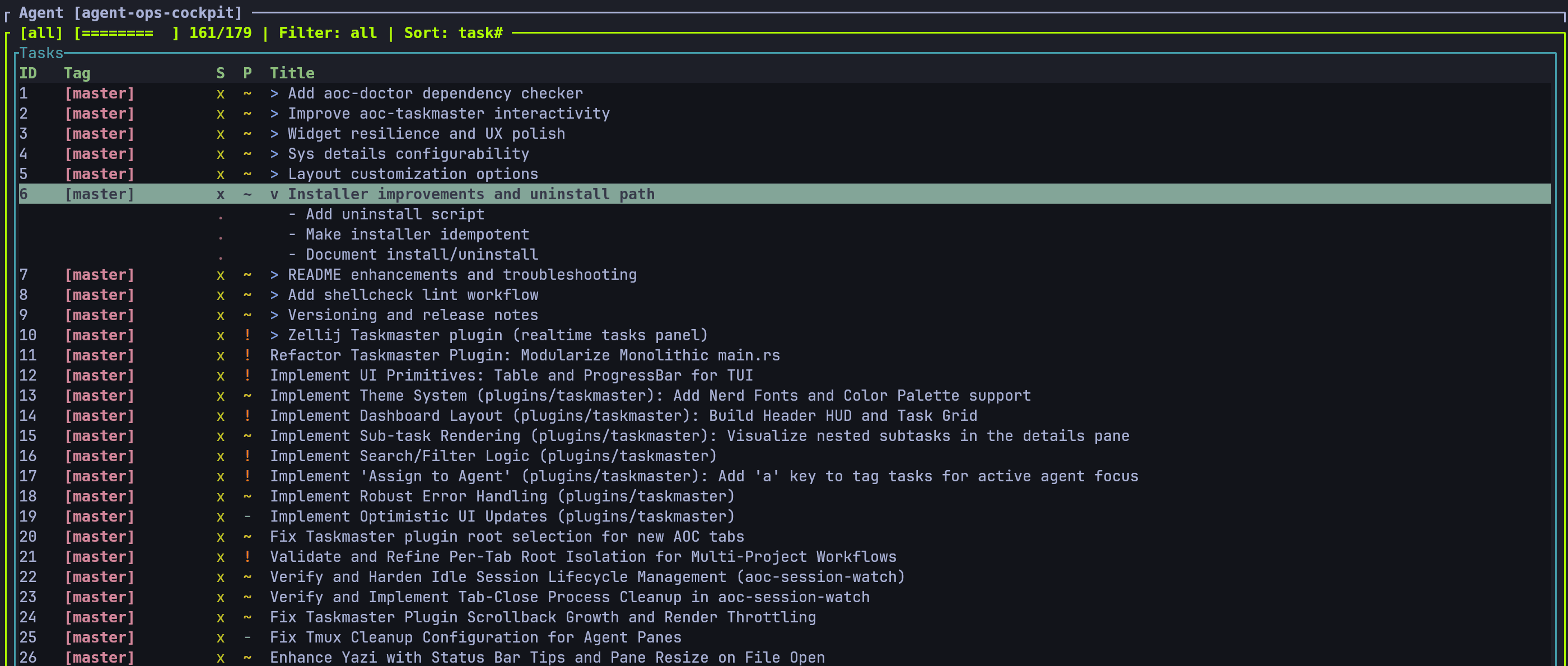
- tasks.json
- The task ledger — tasks, sub-tasks, tags, and status, versioned next to the code.
The operating rule
Agents propose; a human-verified gate commits. Workers never push.
- Agents propose
- A worker produces a diff and a report. That is the whole of its authority.
- A human-verified gate commits
- The diff is re-read and the checks run before an atomic commit lands.
- Workers never push
- No worker holds push access. There is no path from agent output to your branch that skips a person.
Numbers
What is public, and what it has produced.
Agent Ops Cockpit is a repository you can clone. The output is commit history on the software we build with it.
- 403
- Commits
- Public history, Apache-2.0
- 8
- Rust crates
- 51
- CLI commands
- 13
- Repositories
- Running the same versioned contract
- 383
- Commits on Voyager
- July 2026 alone
Evidence
What it looks like while it runs.
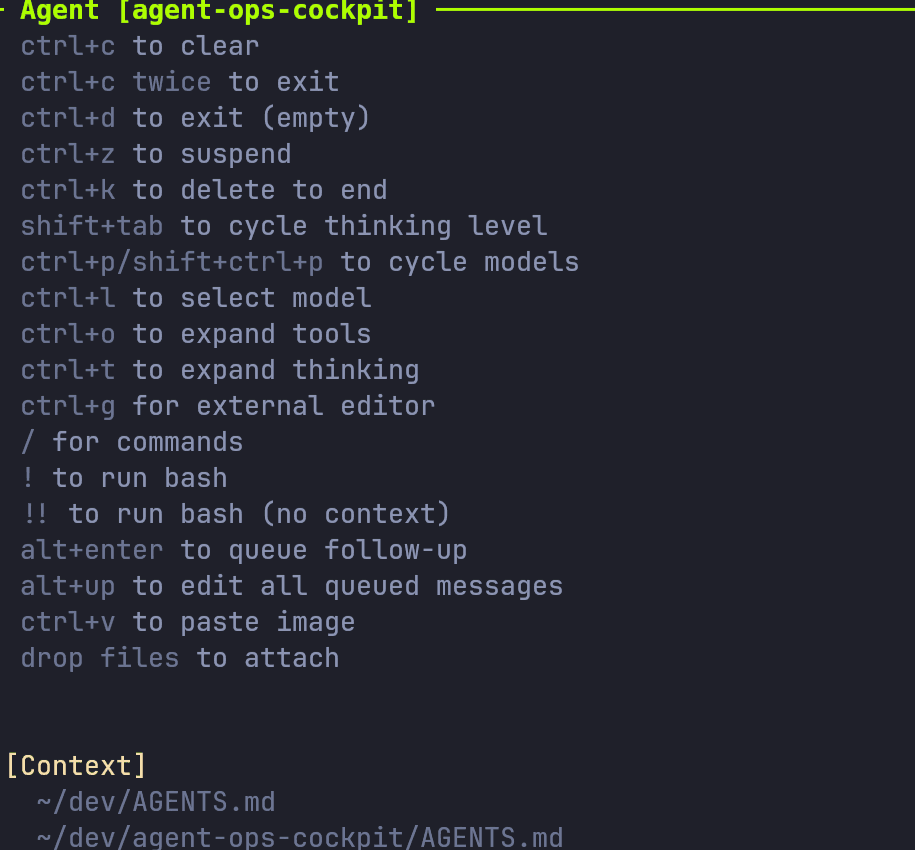
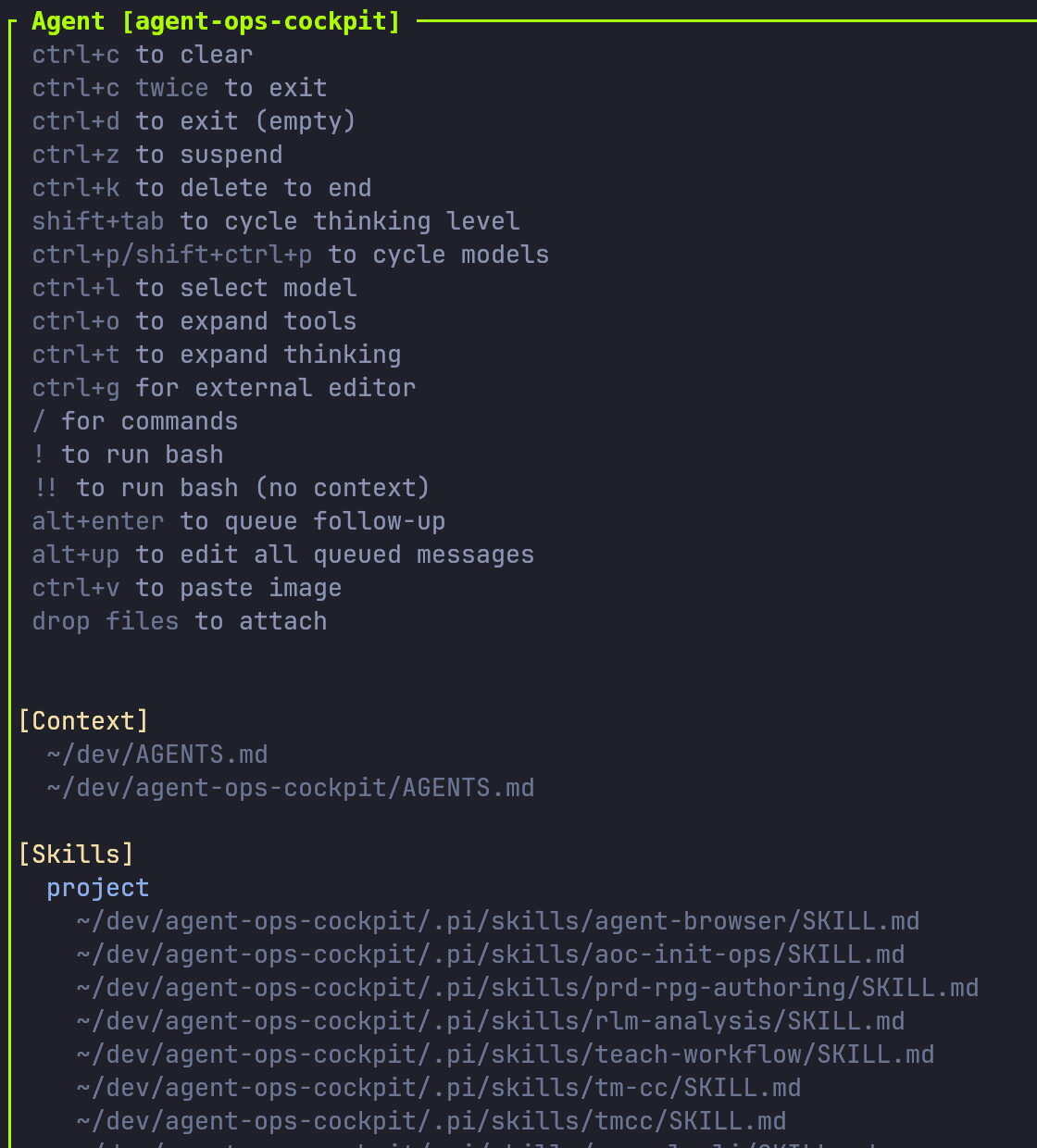
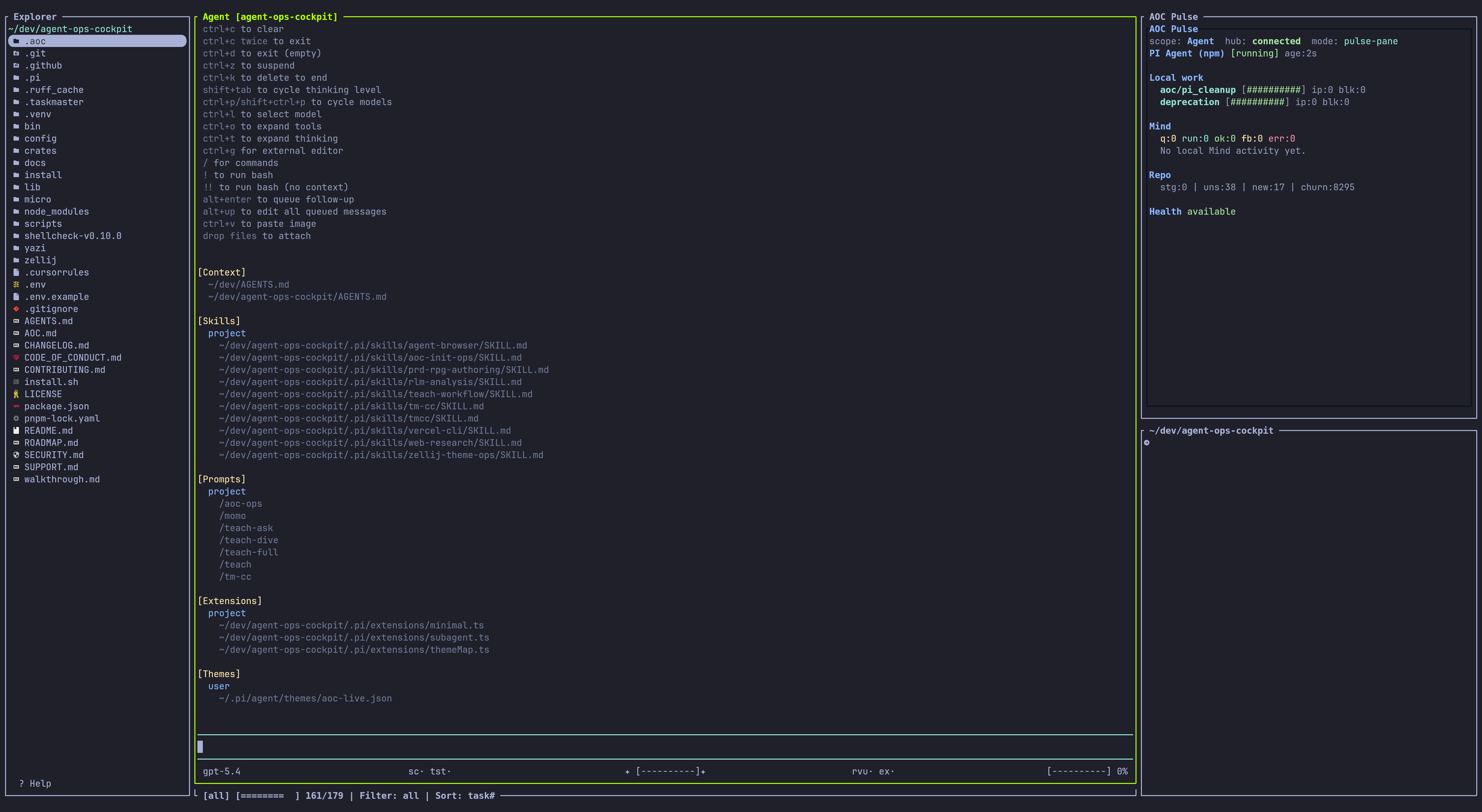
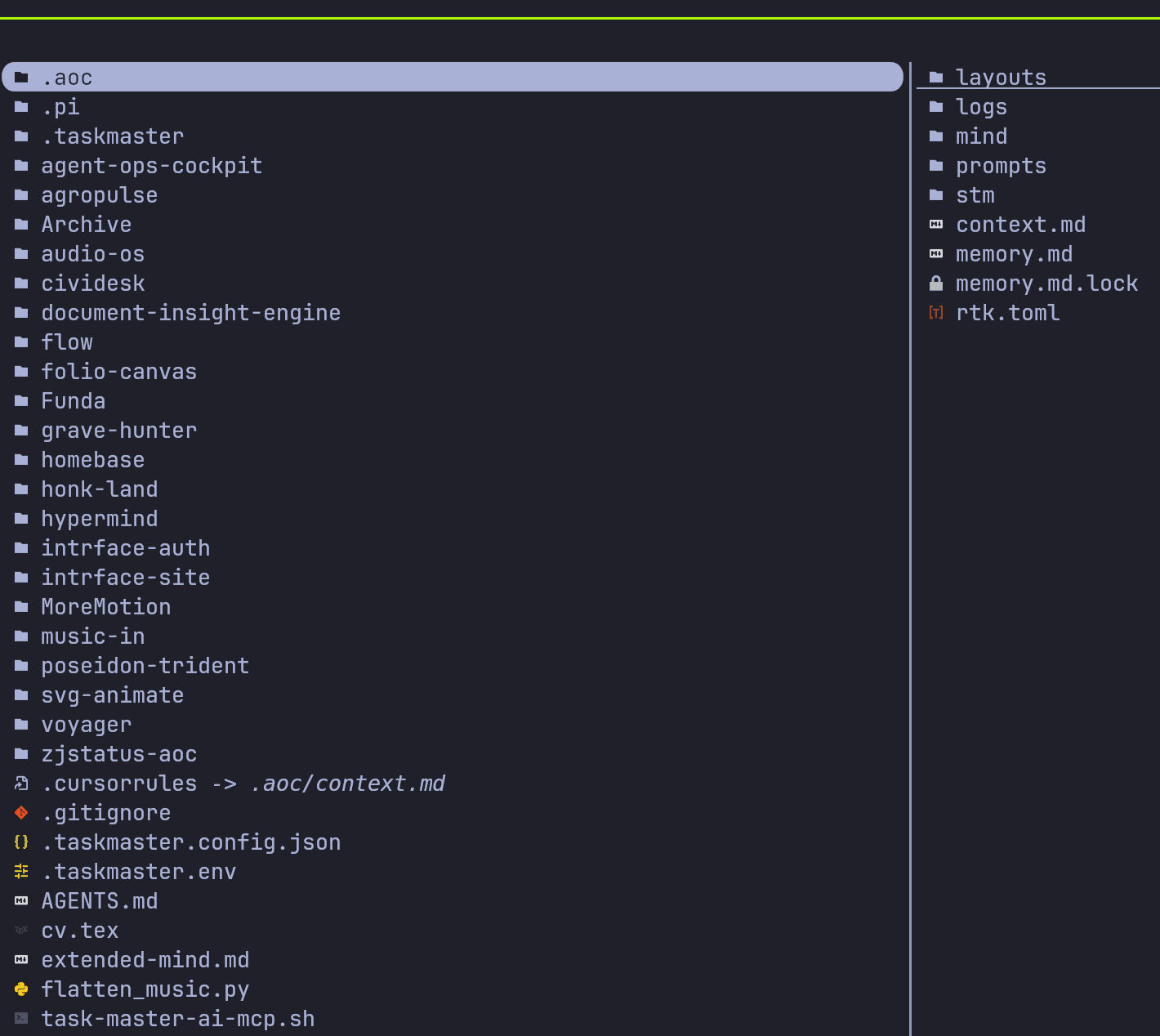
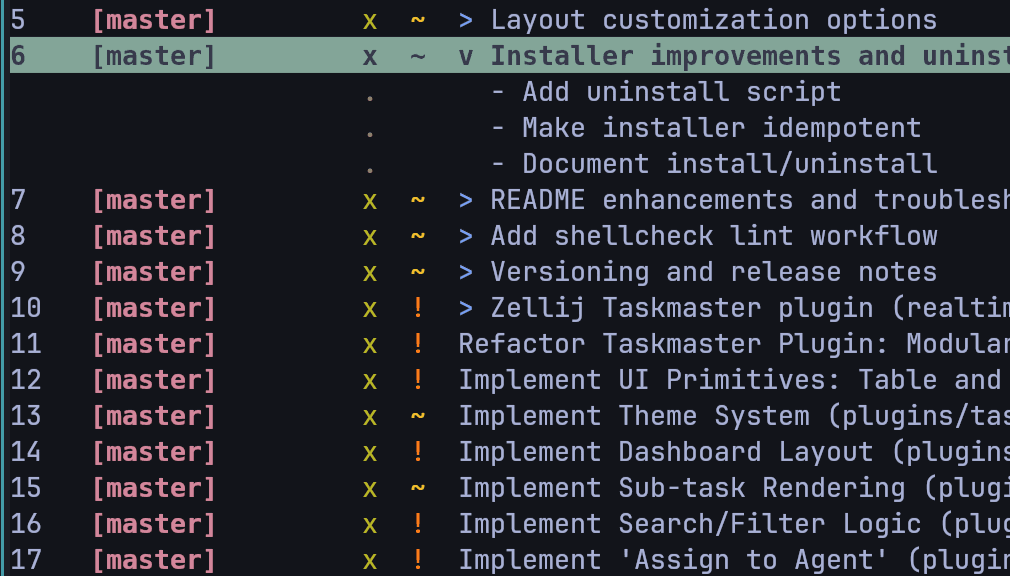
Three views of one working session. No mock-ups — this is the terminal we work in.
The cockpit
Repositories on the contract
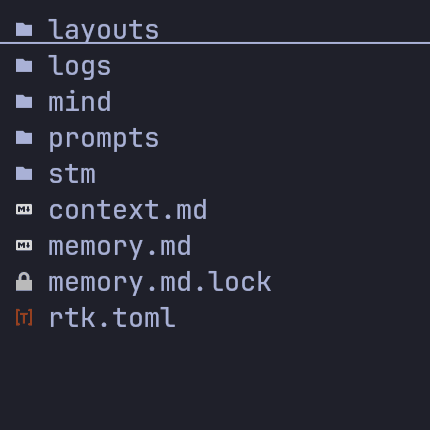
The task ledger
What you get
Three things a public method buys you.
You are not buying enthusiasm about agents. You are buying written rules.
- 01
Throughput without unreviewed agent output
Several scoped packets run at once. None of them can commit. Speed comes from parallelism, not from skipping the read.
- 02
Context that lives in the repo, not in someone's chat history
AGENTS.md, DESIGN.md, and the task ledger are files in your codebase. Hand the project to another team and the knowledge goes with it.
- 03
A method you can audit
The contract schema, the command surface, and the gate are public. Read them before you sign anything.
Next
Read our repo. Then bring us your system.
Check the method before you hire anyone to use it on your codebase.